
Veritas needed to consolidate fragmented UX efforts across a global portfolio of enterprise data management products. The mandate: build and lead a full-stack team of 10 while simultaneously redesigning the flagship Velocity platform and establishing the systems governing UX across the entire organization.
Velocity platform redesign
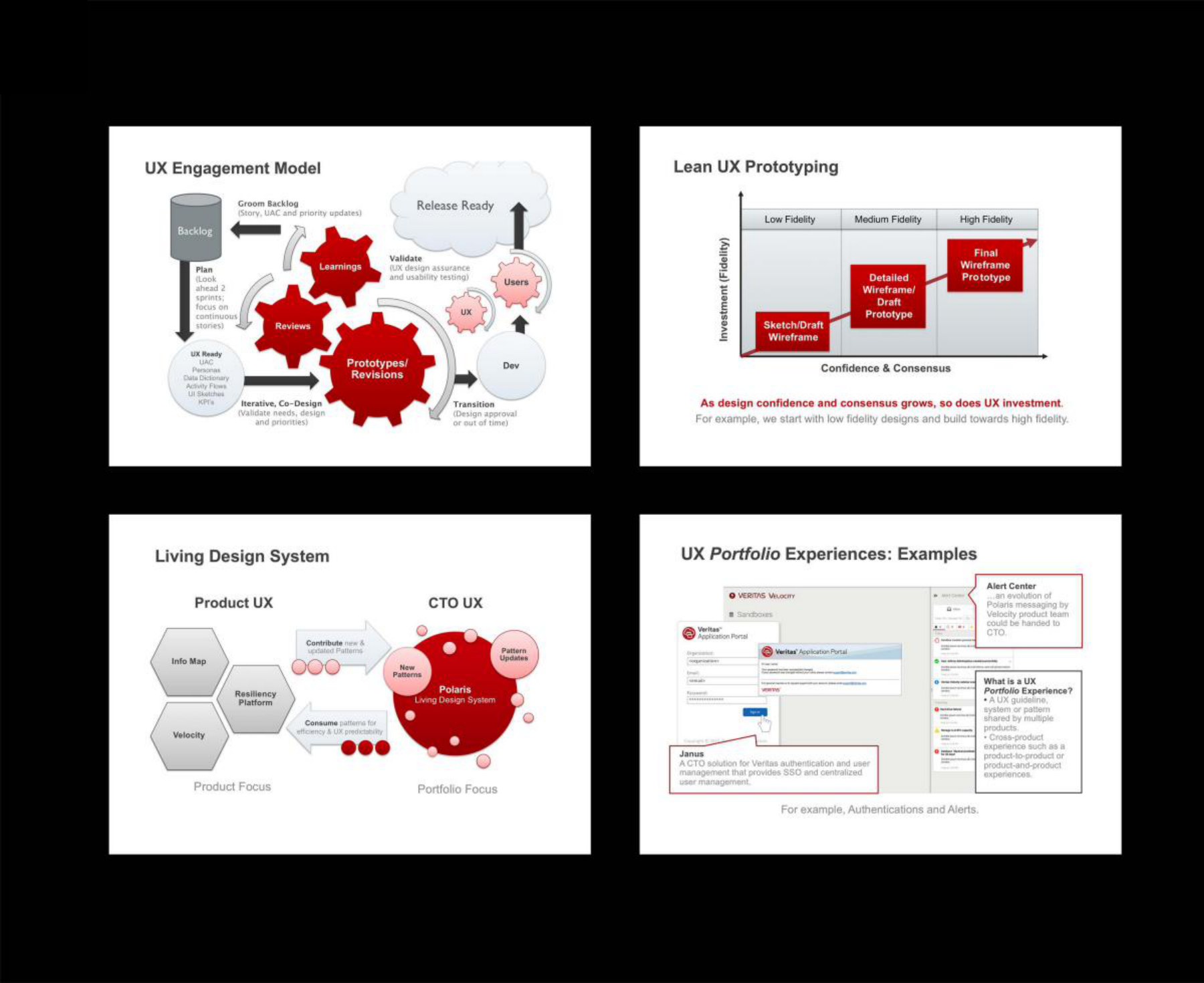
Velocity is Veritas's flagship disaster recovery and data resiliency management platform — used by enterprise IT teams to monitor global resiliency groups, backup destinations, sandboxes, and system health across distributed infrastructure. The redesign brought a coherent visual language to a previously fragmented UI: a global map showing resiliency status at a glance, a left-nav hierarchy reflecting actual admin workflow, and a modular dashboard with gauge-based system health indicators for storage, memory, and CPU usage. The Alert Center was completely rearchitected — replacing an ad-hoc notification panel with a structured, upvotable problem queue that let IT teams surface and prioritize the most impactful issues collectively.
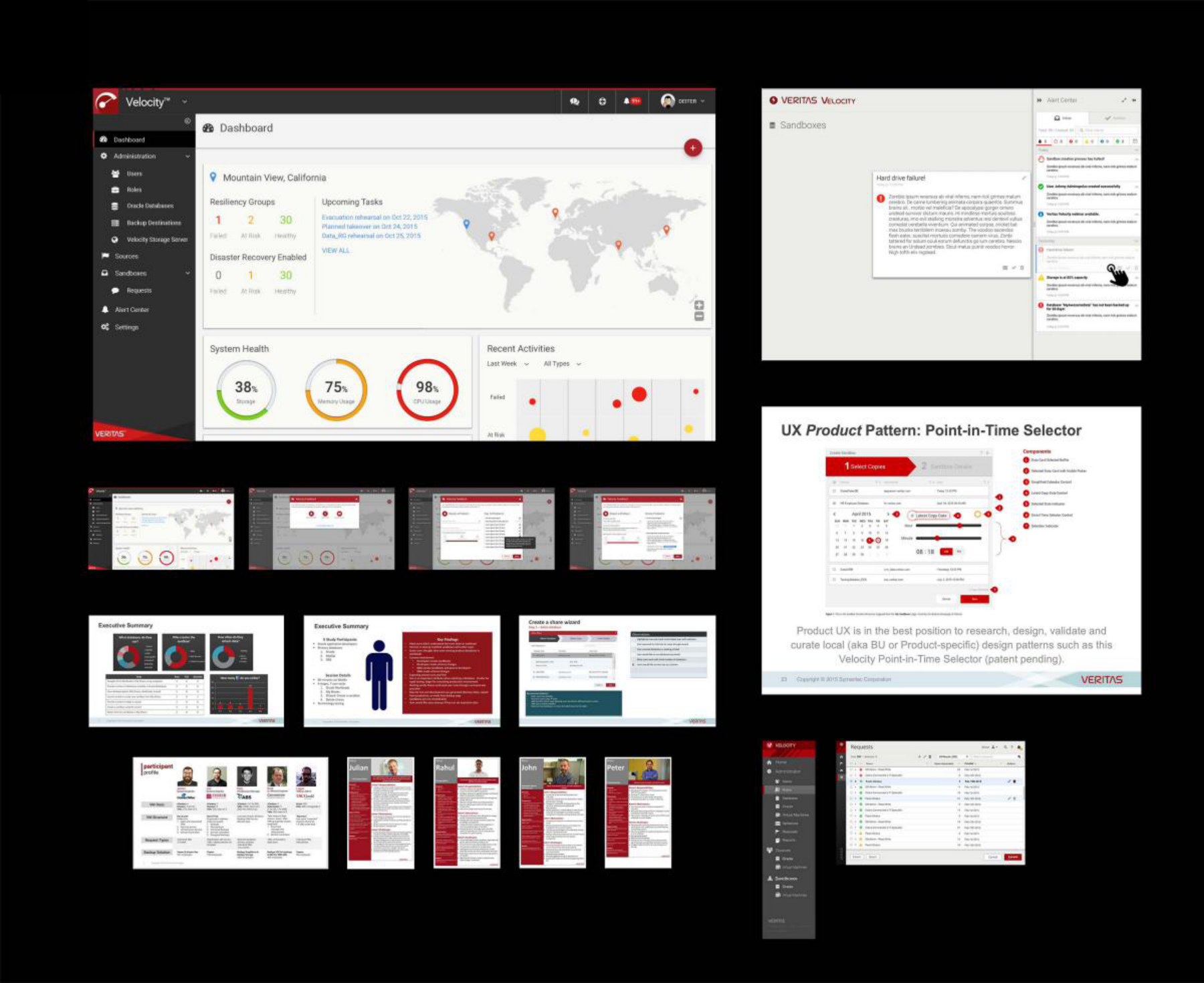
Velocity Feedback — crowdsourced problem reporting
Designed a structured in-product feedback system that allowed users to report problems and — critically — upvote existing reports from other users. The Top 10 Problems list gave the product team a real-time view of what was actually breaking in the field, prioritized by user impact rather than recency. The multi-step flow balanced friction (enough to get quality reports) with speed (quick enough that users wouldn't abandon it).
"Shane distinguished himself as a rock-solid leader and played an instrumental role consolidating our corporate-wide UX efforts that will shape the company's customer-facing portfolio for years to come."
Polaris — living design system
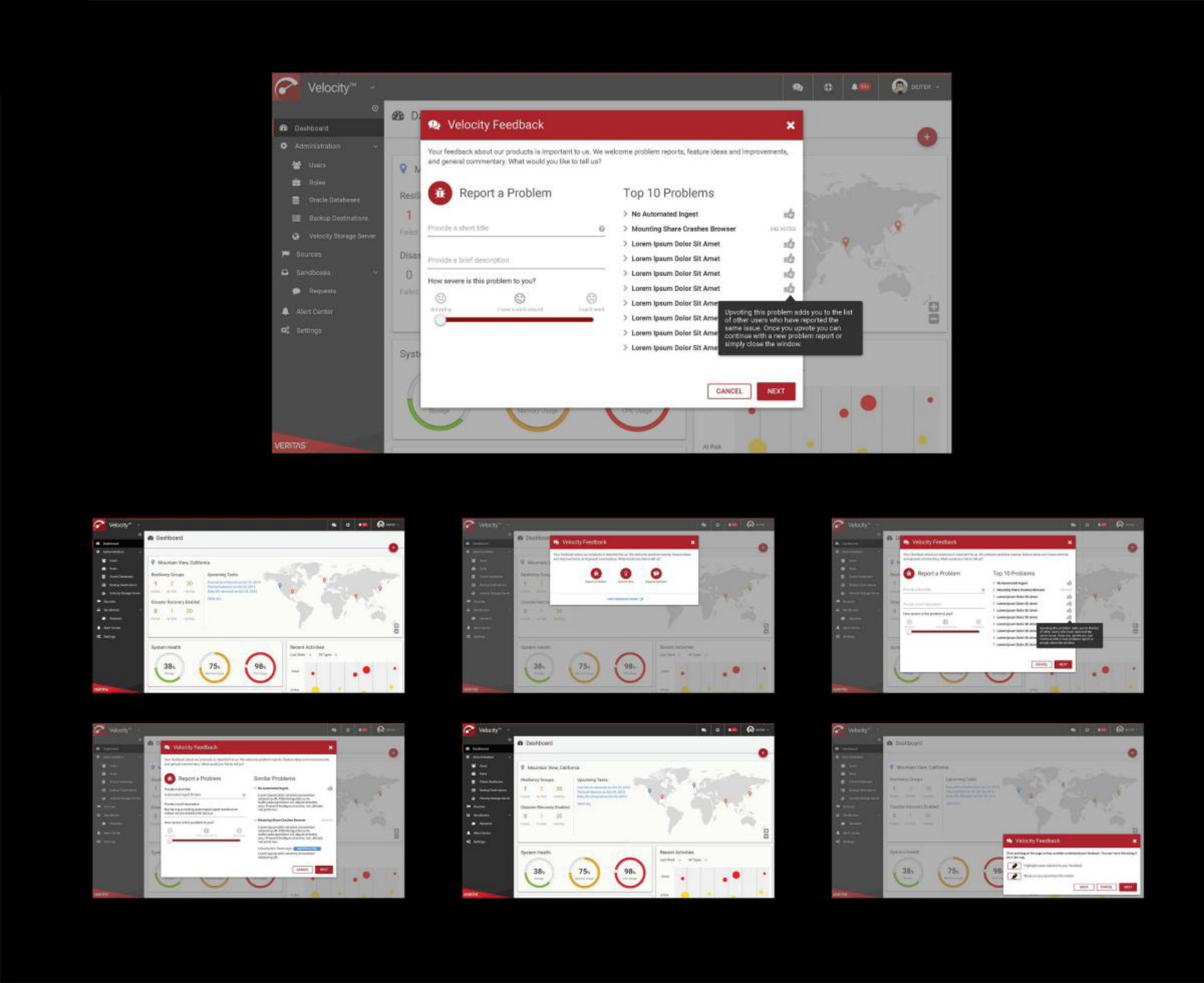
Established Polaris, a centralized living design system where product UX teams contributed patterns upward and CTO-level UX consumed them for portfolio-wide consistency. The system included an Info Map, Resiliency Platform patterns, and the Velocity component library — allowing teams to move faster without sacrificing coherence. A patent-pending Point-in-Time Selector UX pattern emerged from this process.
Lean UX engagement model
A formal UX Engagement Model defined the iterative co-design process from backlog grooming through prototype, validate, and release. A Lean UX Prototyping matrix mapped fidelity investment against confidence and consensus — making it easy for teams to choose the right artifact at the right moment.