

GitLab was already the world’s largest all-remote company before COVID. Its async, documentation-first model was built to scale without traditional office friction. I joined to lead product design across stages such as Plan, Create, and Manage, then moved into an Experience Design Director role spanning brand, growth, and a Growth team of 8. GitLab’s ambition — a single DevOps platform across the full software lifecycle — aligned with my experience designing complex systems.
As Experience Design Director, I led brand, growth, and UX across GitLab’s DevOps platform, running a full-stack Growth team of 8 and a UX team of 9 designing three stages of GitLab’s end-to-end platform. The work spanned product design, systems thinking, growth execution, and brand — with a single throughline: designing and marketing the only DevOps solution covering the entire software lifecycle.
Context
GitLab is a single DevOps platform spanning the full software lifecycle — from planning and coding to deployment and operations. The product is organized into stages, each with its own team, cadence, and ownership.
The company runs entirely remote — no offices, no synchronous default. Everything is documented, async, and public by design. Before the rest of the world needed to figure out remote work, GitLab had already been doing it at scale for years.
Challenge
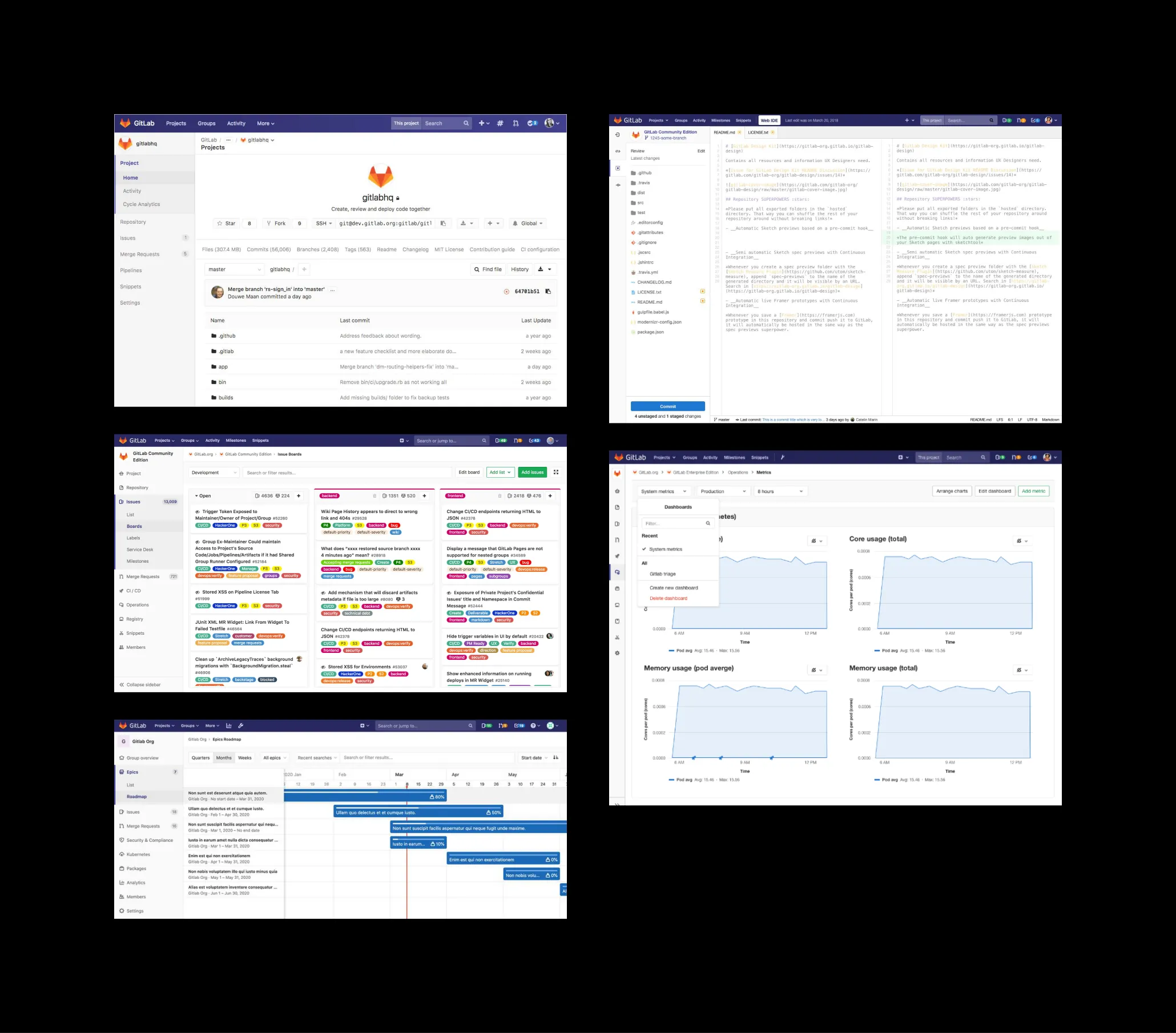
GitLab’s product was organized into stages — Plan, Create, Manage, and others across the full DevOps lifecycle — each with strong ownership and moving fast. My scope covered Plan, Create, and Manage. The design challenge was one of coordination at scale: aligning UX patterns, shared systems, and growth surfaces across teams operating asynchronously, across time zones, in a product that spanned the entire software lifecycle.
Product leadership
Leading UX across Plan, Create, and Manage meant designing coherent experiences across teams that each had their own ways of working. How do 20+ teams working concurrently ship a cohesive platform? The answer isn’t management — it’s systems. Design systems that define a shared language. Async playbooks that align ways of working. And shared KPIs that keep everyone pointed at the same outcomes.
I led with Design Thinking, Lean UX, and Agile UX principles — and contributed relevant learnings to the async playbook to scale those practices across the team. GitLab’s diverse user base — developers, project managers, operations teams, buyers — each needed something different from the same platform. Cross-pollinating best practices, bridging teams working concurrently in their own ways, and promoting platform-wide consistency horizontally — all while the platform was being built at speed — was the core leadership challenge.
Systems thinking
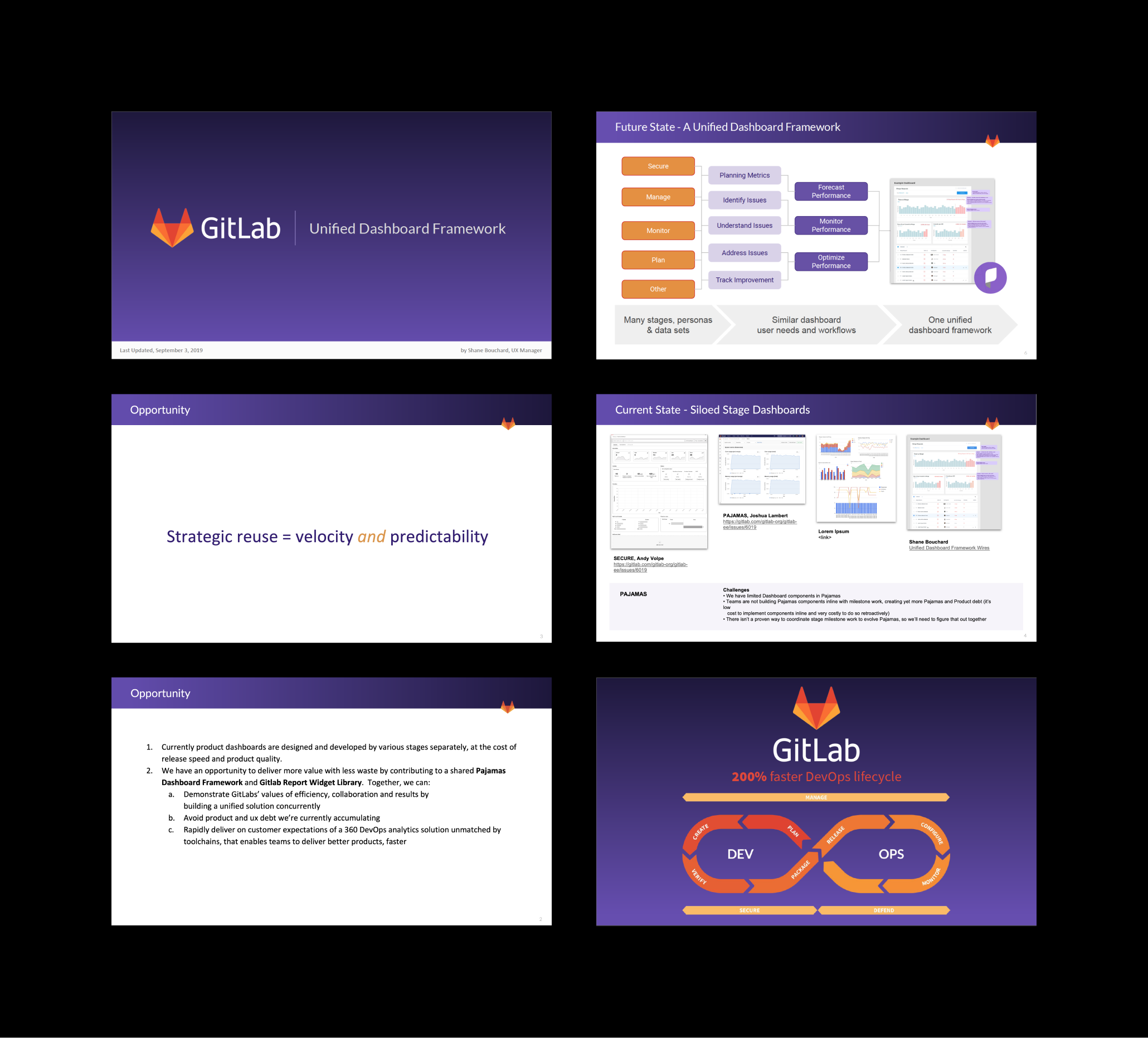
GitLab’s product stages each had their own dashboards — built independently, optimized locally. The opportunity was to consolidate them into a single shared framework that could serve multiple stages, personas, and data sets without duplicating effort.
Pajamas, GitLab’s design system, was already growing and being adopted across the platform. The Unified Dashboard Framework operated at a different altitude — a systems solution for cross-stage UX consistency that built on top of Pajamas rather than alongside it.
I proposed the Unified Dashboard Framework — defining the architecture, the reuse model, and the strategic case for cross-stage alignment. The principle was simple: strategic reuse equals velocity and predictability. Building once for many stages, rather than many times for one, was both a design and a business argument.
“Strategic reuse = velocity and predictability.” — Unified Dashboard Framework, GitLab 2019
Remote as infrastructure
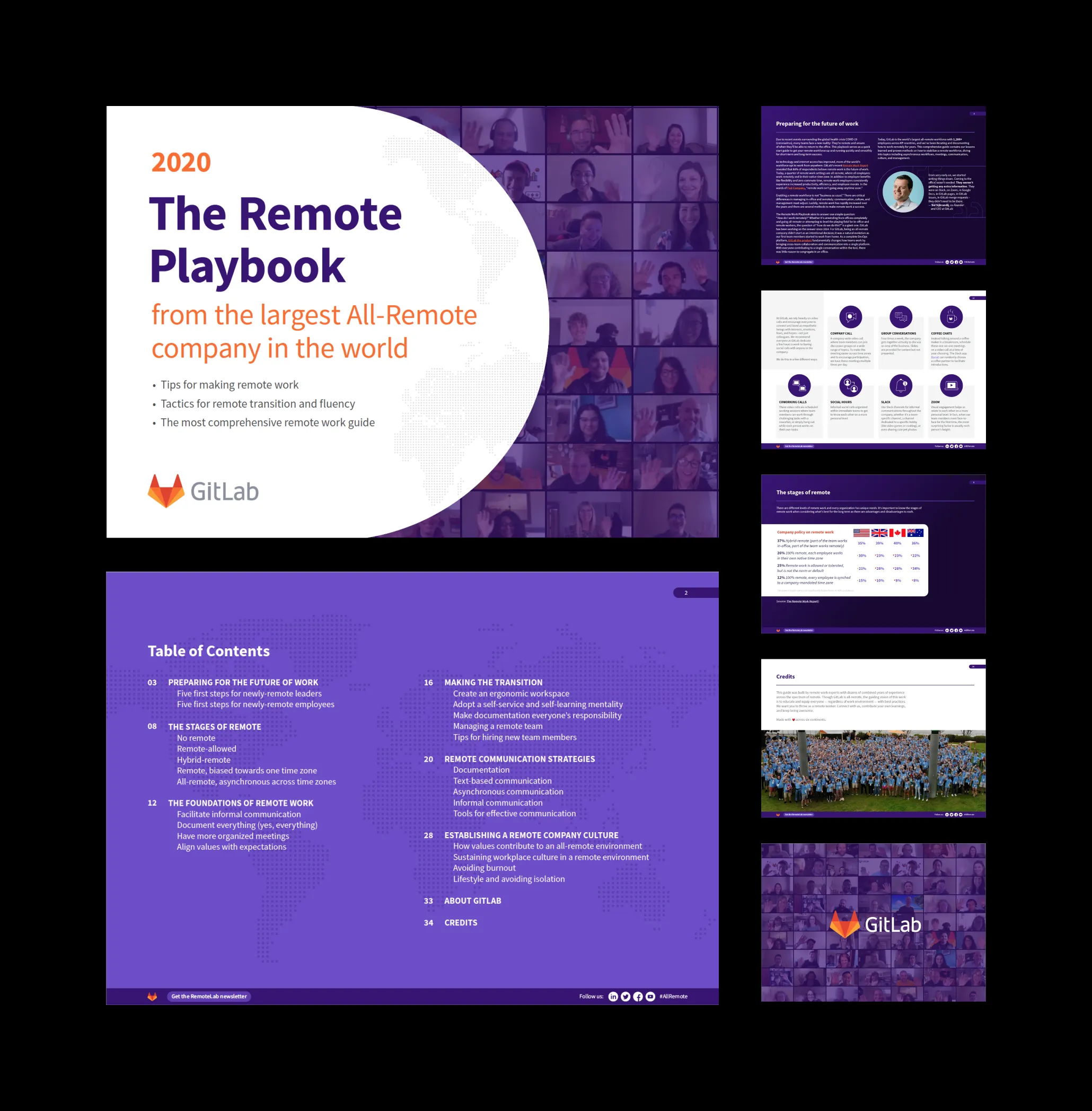
GitLab had built genuine, hard-won expertise in async work long before the world needed it. When the question arose internally about whether to publish that knowledge externally, I advocated for it — not as a marketing move, but as an act of sharing. The timing wasn’t opportunistic. It was serendipitous. The world was going to need this knowledge. We had it. Publishing it was the right thing to do — and it positioned GitLab as a credible, generous voice at exactly the right moment.
The same documentation-first discipline shaped how the UX team operated: the UX Handbook, async design reviews, and playbooks that made remote collaboration a feature rather than a constraint.
This would shape how I approached like challenges going forward. A true unlock.
Growth and brand
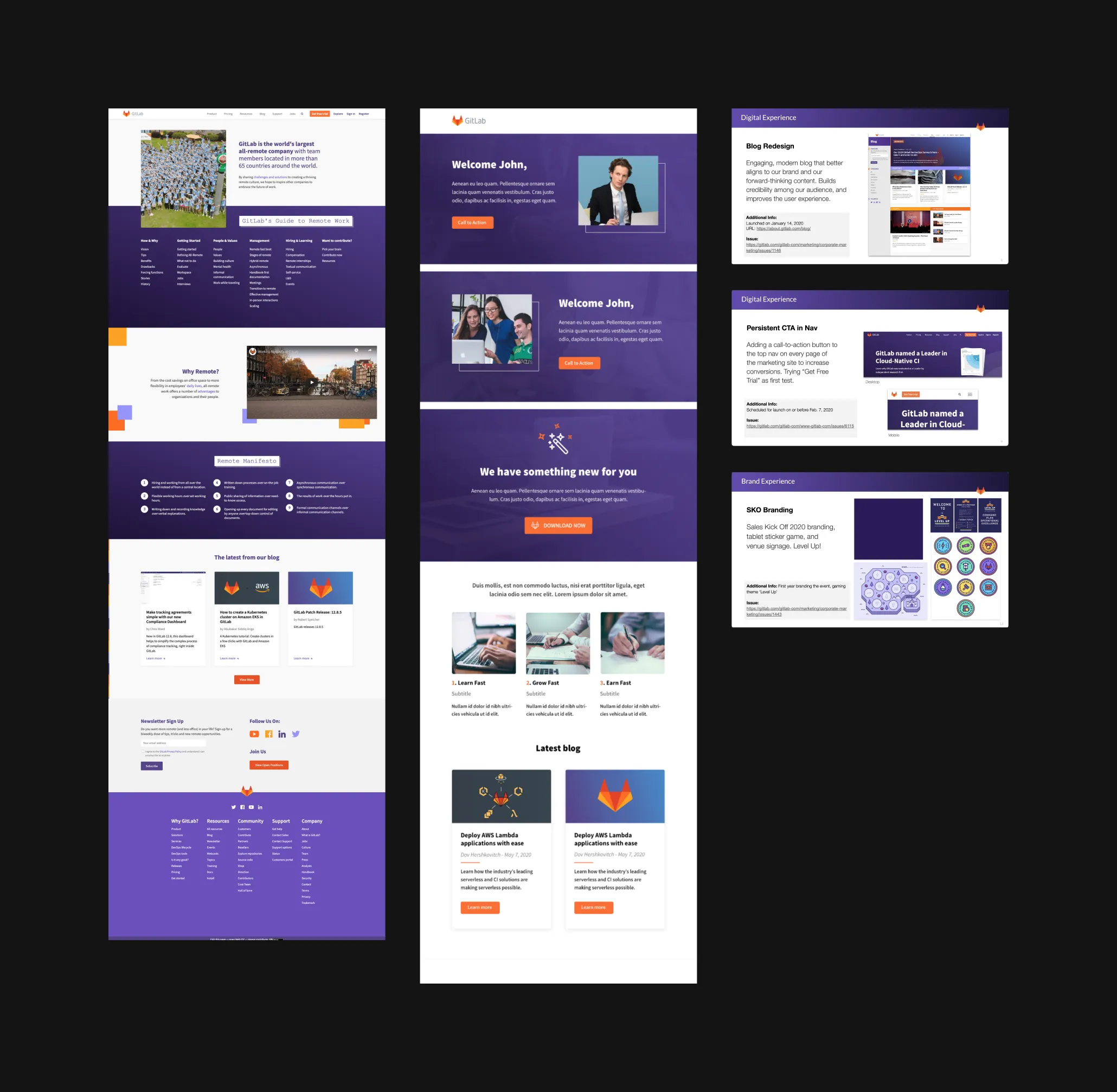
As Experience Design Director over marketing and growth, the work extended well beyond product UI. GitLab competed in a crowded DevOps market where comparison was a buyer behavior. The Growth team optimized the strategy, tightened the digital ecosystem, and brought a growth mindset to how GitLab showed up at the consideration stage — shipping comparison surfaces, conversion-focused marketing pages, and SKO branding in parallel with product.
Managing UX across Plan, Create, and Manage while building toward the ED role meant understanding GitLab as both a product and a market position.


Creative exploration
The “In The Lab” campaign extended GitLab’s voice into physical space — OOH placements, developer-targeted messaging, and a visual identity that translated the platform’s technical confidence into brand clarity. Developer audiences are skeptical of marketing. This work had to earn attention, not demand it.
Impact
- Joined as Sr. UX Manager leading product design across Plan, Create, and Manage; later stepped into the Experience Design Director role spanning brand, growth, and a full-stack Growth team of 8
- Designed UX across Plan, Create, and Manage — three stages of GitLab’s end-to-end DevOps platform
- Proposed the Unified Dashboard Framework, defining the architecture and case for cross-stage reuse
- Contributed to the Remote Playbook, UX Handbook, design system, and product strategy
- Interviewed 50+ designers and hired 5 in 7 months across global time zones
- Led blog redesign, persistent CTA system, conversion surfaces, and SKO branding
- Applied Design Thinking, Lean UX, and Agile UX to align product and growth teams operating asynchronously
Async isn’t a constraint — it’s a discipline. The teams that learn to work with it, document well, and build systems that outlast any individual contributor move faster and more coherently than those that don’t. That’s what GitLab proved before anyone was paying attention. Building inside that model shaped how I think about design leadership today.