I joined Fyllo as VP of Design when the team was two people, building a platform to help cannabis brands and retailers succeed across regulatory intelligence, compliance automation, and retail marketing. I came in as a player-coach — getting hands-on with the compliance product and customers while working with the team to rapidly scale UX. The goal was to make design a strategic driver, not a service function.
The products we designed helped cannabis brands and distributors avoid costly compliance failures. The operating model I built helped the company stop treating design as a service function and start treating it as a strategic driver. Both things happened because I refused to separate them.
The problem
Cannabis packaging compliance is non-negotiable and genuinely complex. Requirements vary by state, product type, and distribution channel. A failure isn’t a bad user experience — it’s a legal and financial exposure. The workflow to prevent those failures involved a multi-party supply chain: Producers, Distributors, and Retailers, each with their own teams, tools, and approval gates.
The existing process was entirely manual. Emails. Images sent back and forth. Compliance issues caught after print runs were complete. That’s a very expensive place to find a problem.
Approach
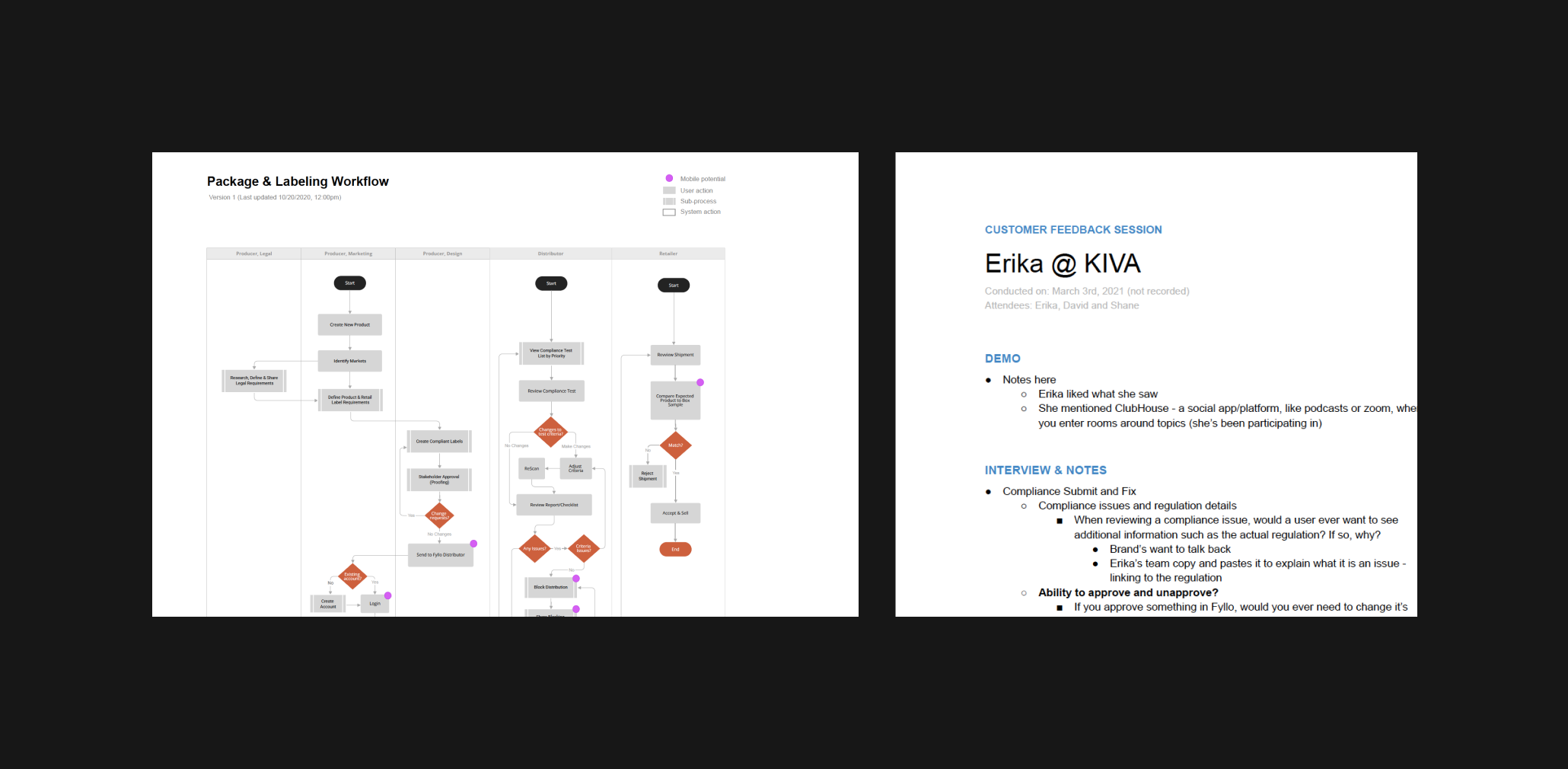
I started with the full system — not the first screen. Multi-lane workflow diagrams mapped every actor, every decision point, every edge case across the complete compliance lifecycle. These were iteratively reviewed and validated with business stakeholders, engineering, and customers before a single wireframe was drawn. This is the step teams skip when they’re in a hurry. It’s also the step that prevents the expensive surprises that come from skipping it.
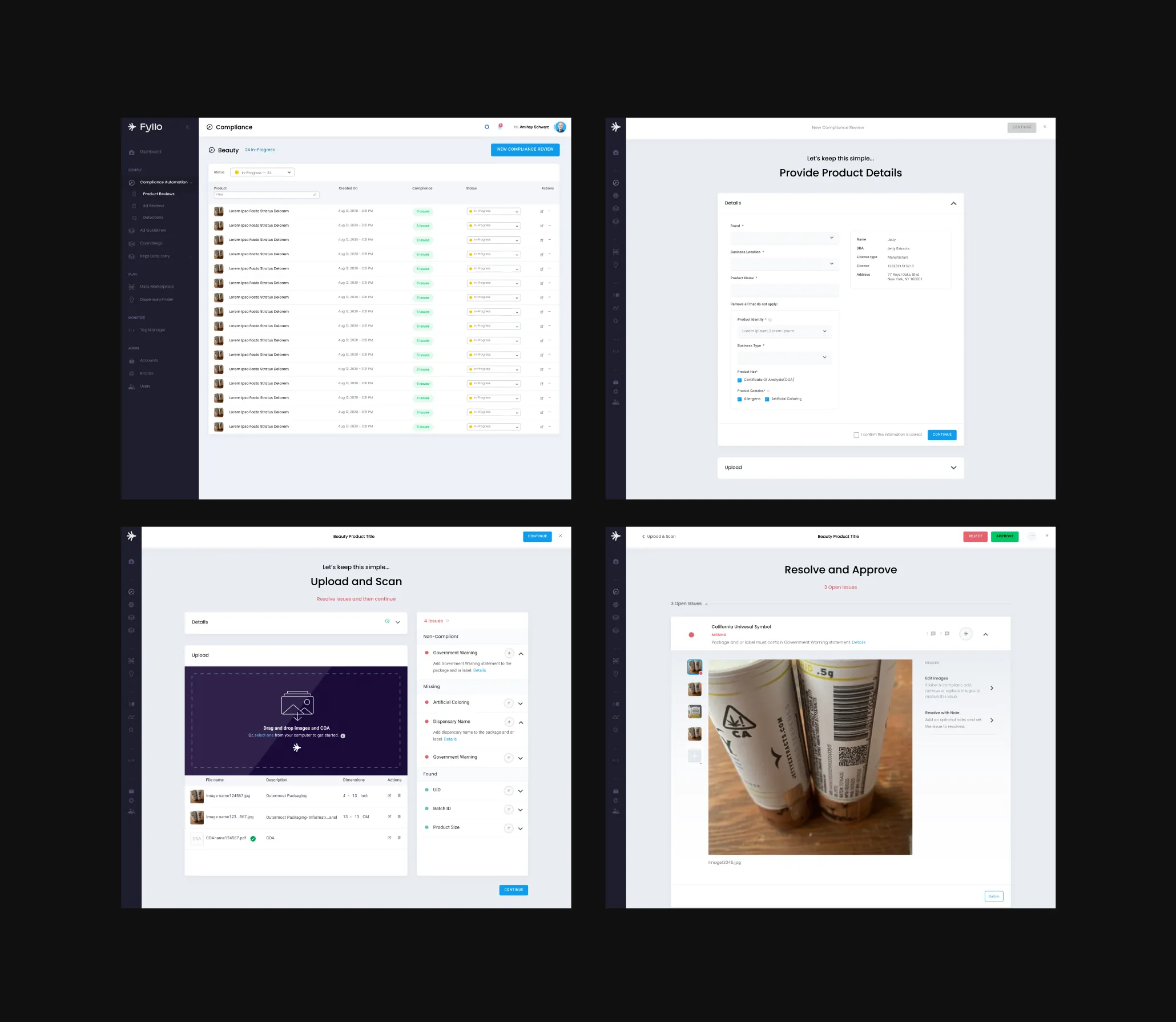
At the core of the scan step was AI-powered image recognition that automated what had previously required manual review — reading packaging surfaces, identifying required compliance elements, and flagging violations by jurisdiction. The compliance report surfaced specific issues by state (California, Michigan, Ohio) with in-line commenting, status tracking, and direct submission to the distributor for approval.
The product was designed to work across desktop — for design-stage review of flat files — and mobile, for warehouse-floor scanning on the go, with data synced across both surfaces.
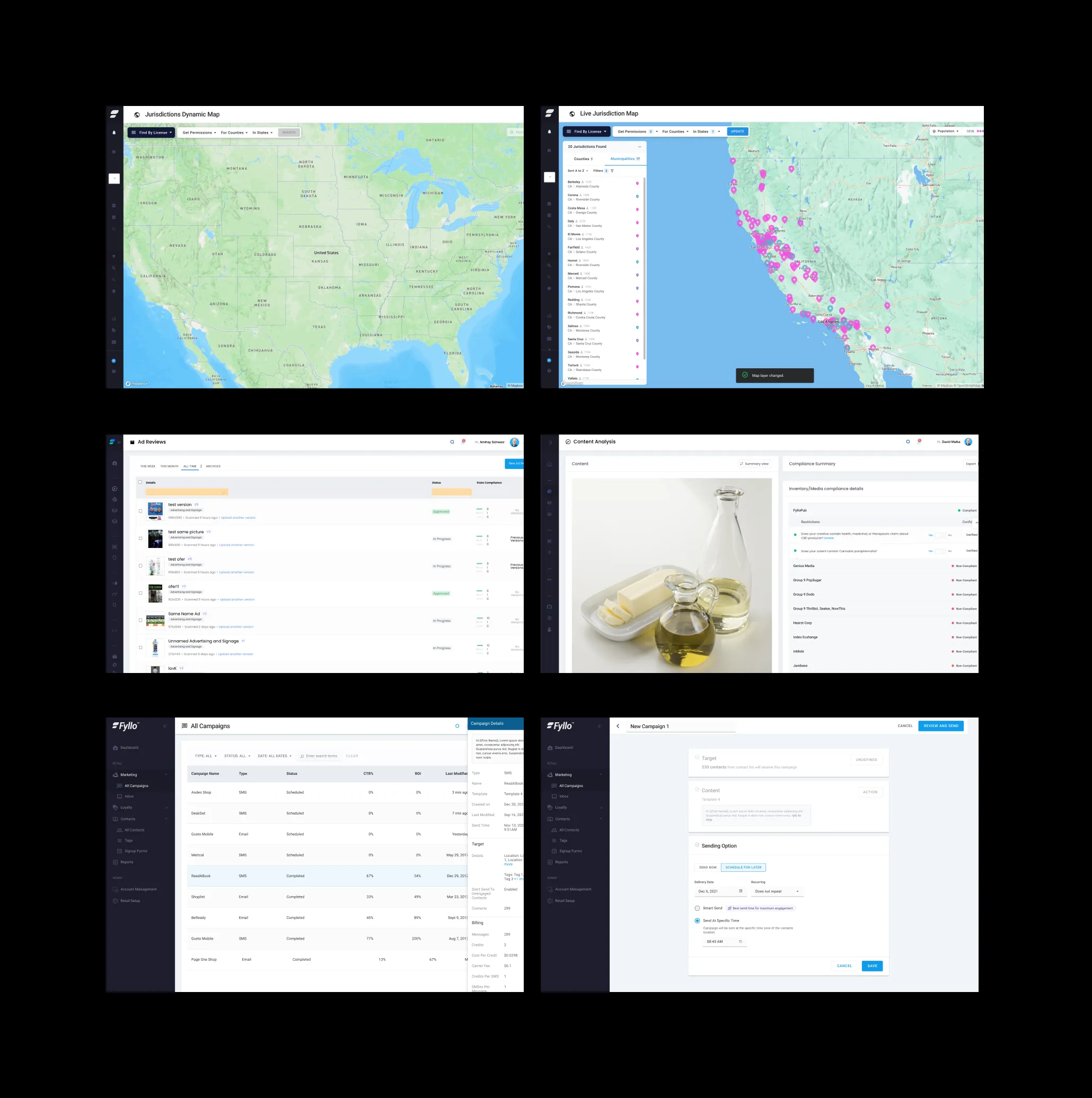
As the platform grew — compliance expanding from cannabis to beauty and advertising verticals, RegsDB evolving from a regulatory database into a richer map-driven legislative intelligence tool, and retail expanding to cover digital marketing and in-store signage — so did the team. Managing a lean global UX team across three concurrent product tracks required more than strong individual contributors. It required a system.
Scaling UX
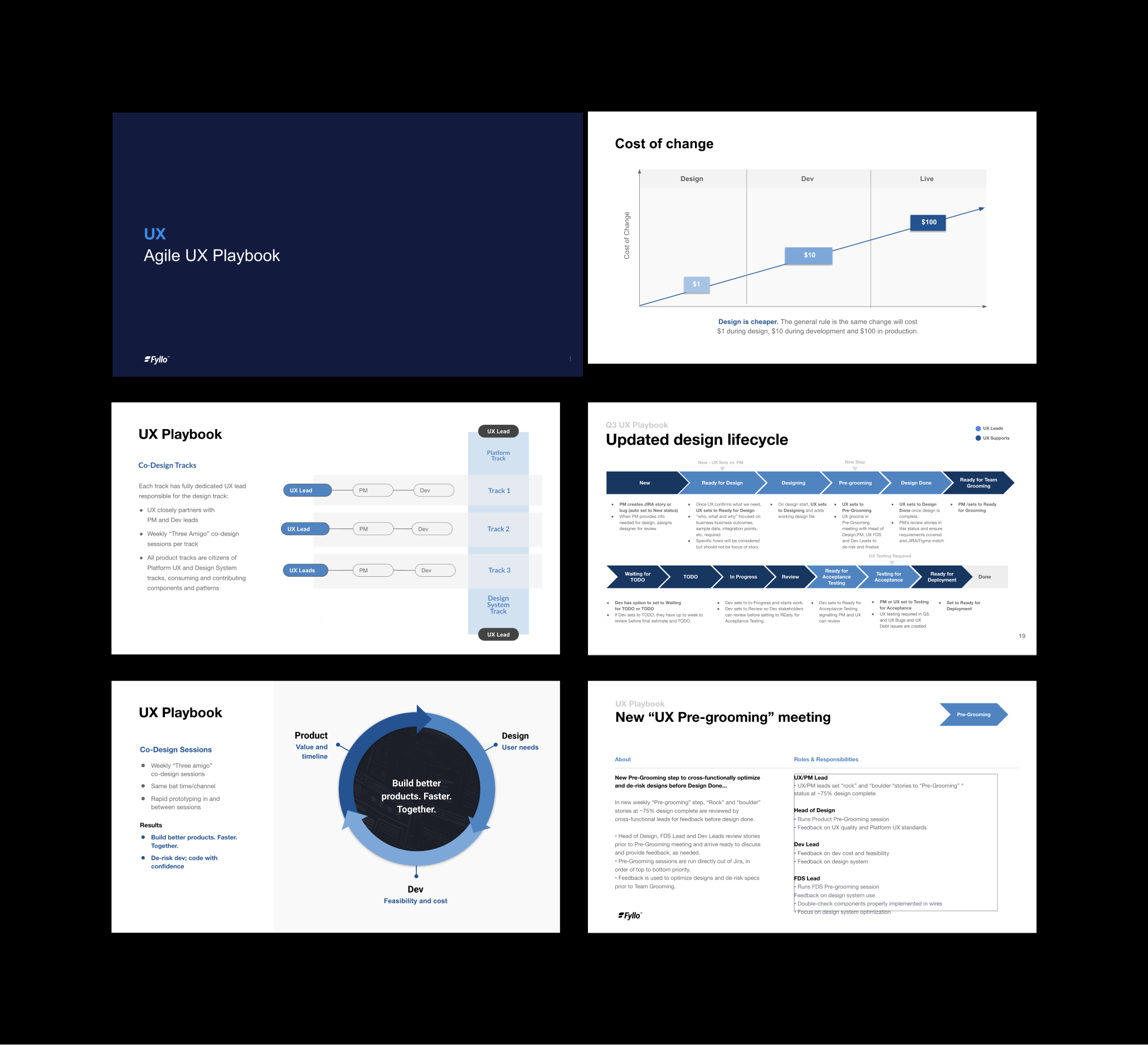
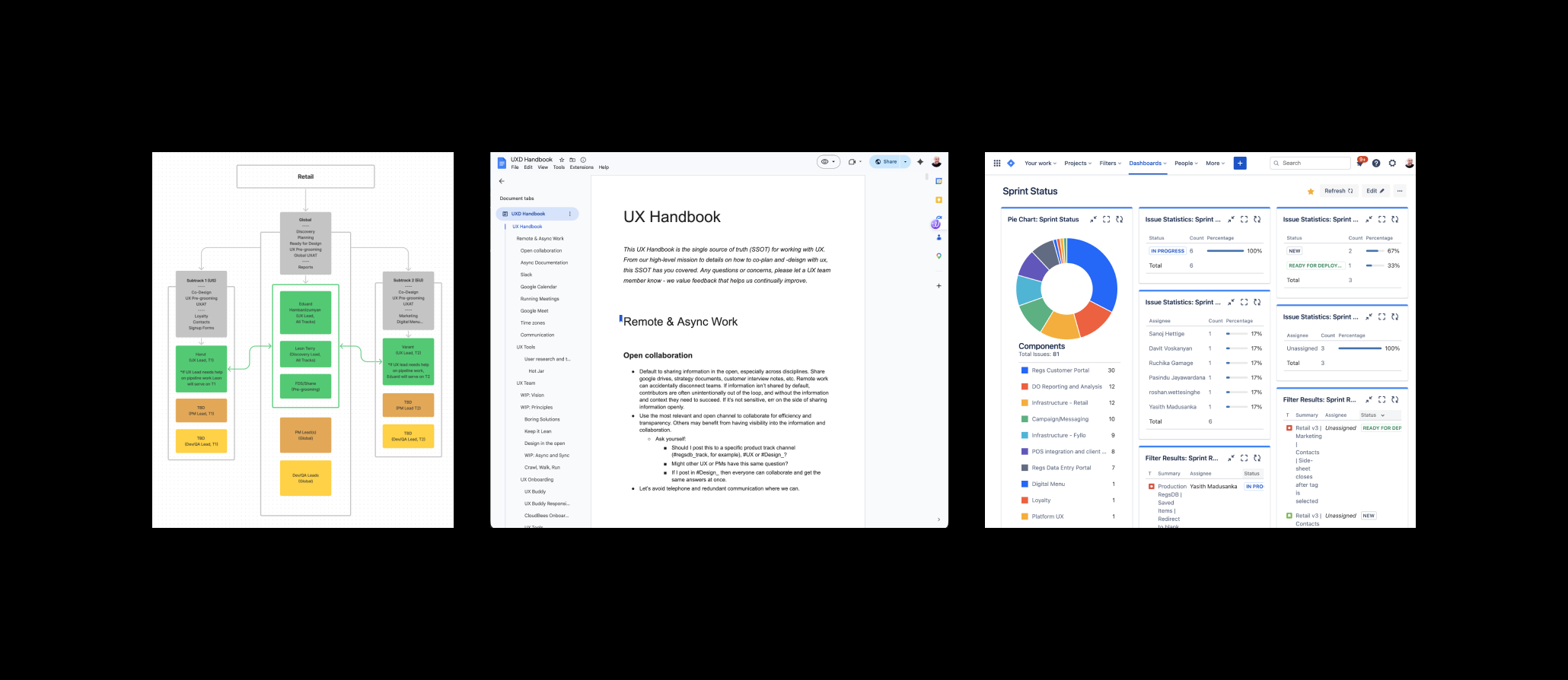
While leading the product, I built the operating system the team needed to scale. The Agile UX Playbook introduced a UX Runway running 2–3 sprints ahead of development, Three Amigos co-design sessions (UX, PM, and Dev weekly), and a lean prototyping ladder that kept iteration costs low. The UXD Handbook established async-first practices for the global team — modeled on GitLab’s distributed work model — covering everything from Slack norms to co-design facilitation to self-serve checklists for recurring design activities.
At peak, the team tracked 81 active design issues across 10+ product surfaces simultaneously: Regs Customer Portal, Campaign/Messaging, Retail Infrastructure, POS integration, Digital Menu, and more. The same team shipped the Fyllo Design System, a beauty/cannabis compliance product, and a digital signage system for cannabis retail concurrently.
"Scaling design isn’t a headcount problem. It’s a systems problem."